
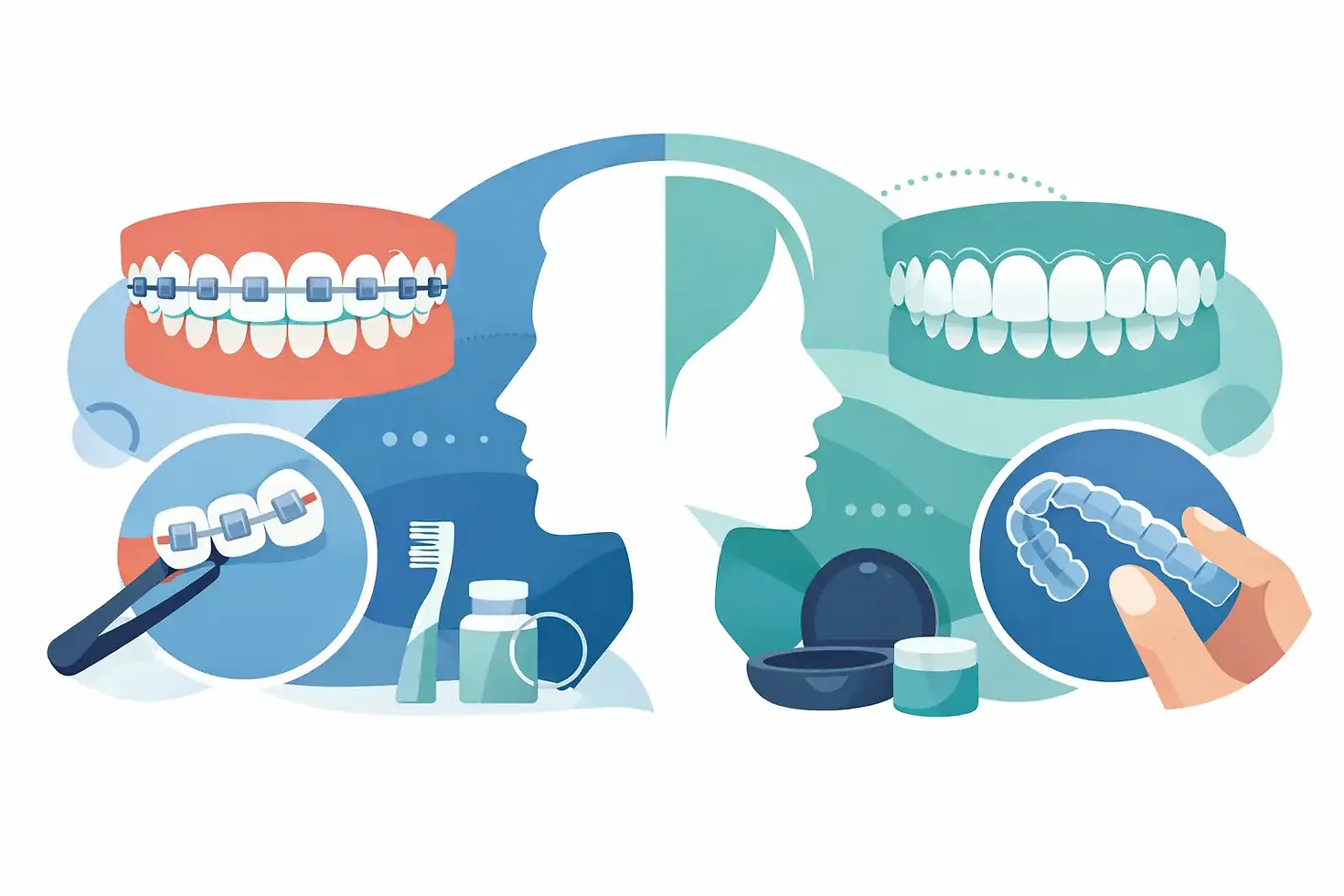
Braces vs Aligners for Adults

You may not mind a longer commute, but you probably do mind the idea of wearing the wrong orthodontic treatment for the next year or two. For many patients comparing braces vs aligners adults often ask the same question first: which option will actually fit real life? Work meetings, family schedules, photos, travel, and comfort all matter. So does getting a healthy, stable result.
The honest answer is that both braces and clear aligners can work very well for adults. The better choice depends on your bite, how much tooth movement is needed, your day-to-day habits, and how much responsibility you want to take on during treatment. When adults understand those trade-offs early, the decision gets much easier.
Braces vs aligners adults should compare beyond appearance
Most adults start with appearance, and that makes sense. Clear aligners are far less noticeable than braces, which is a major reason they appeal to professionals and anyone who prefers a lower-profile treatment. If you spend a lot of time speaking with clients, attending events, or being on camera, aligners can feel like an easier fit socially.
But appearance is only one piece of the decision. Orthodontic treatment is really about moving teeth in a precise, healthy way while improving bite function. Some cases are straightforward. Others involve crowding, spacing, jaw alignment concerns, tooth rotations, or a bite that places extra stress on certain teeth. In those situations, the best-looking option is not always the best-performing option.
That is one reason seeing a dedicated orthodontic specialist matters. Adults often come in expecting one treatment and leave understanding why another may be more efficient, more predictable, or better for long-term stability.
When braces may be the better choice
Braces are bonded to the teeth, which means they are working all the time. You do not take them out for meals, meetings, or a long day when you simply do not feel like wearing them. For adults who want a treatment that does not rely on self-discipline, that consistency can be a real advantage.
Braces are also extremely effective for more complex orthodontic problems. If teeth are significantly crowded, rotated, or positioned in a way that requires detailed control, braces often give your orthodontist more precision. The same is true for certain bite corrections, especially when multiple kinds of movement need to happen at once.
Adults sometimes worry that braces are only for teenagers, but modern braces are much smaller and more comfortable than many people remember. They are still visible, of course, and food restrictions are part of the experience. Crunchy, sticky, and hard foods can damage brackets or wires, so treatment comes with some practical adjustments.
There is also the cleaning routine. Brushing and flossing around braces takes more time, and oral hygiene needs to be very consistent. For some adults, that extra effort is worth it for the level of control braces can provide.
When clear aligners may be the better choice
Clear aligners are popular with adults for obvious reasons. They are discreet, removable, and generally easier to manage around meals and brushing. You can take them out to eat what you want, brush and floss more normally, and avoid the food limitations that come with braces.
For many mild to moderate cases, aligners can be a very effective solution. They can address crowding, spacing, and certain bite concerns while fitting more naturally into adult routines. If aesthetics matter a great deal to you, aligners may feel like a more comfortable choice from day one.
That said, aligners only work when they are worn as directed. This is where the conversation gets real for adults. If you are expected to wear aligners 20 to 22 hours a day, taking them out too often can slow treatment and affect results. Skipping wear time for dinners out, coffee habits, social events, or busy workdays adds up.
Aligners also require organization. You need to keep track of your trays, remember to switch them on schedule, and clean them consistently. For responsible, routine-oriented adults, this may be no problem at all. For adults with unpredictable schedules or a tendency to be forgetful, braces can sometimes be the easier path.
Comfort, speech, and daily life
Neither option is completely pain-free, but both are very manageable for most adults. Braces can cause soreness after adjustments, and brackets may irritate the cheeks and lips at first. That usually improves as the mouth adapts.
Aligners can also create pressure when switching to a new set of trays. Some adults describe that pressure as more controlled and less irritating than braces, though every patient experiences it a little differently. Aligners may also cause a slight lisp at first, especially in the first few days, but most people adjust quickly.
From a convenience standpoint, aligners tend to win in daily flexibility. You can remove them for meals, important photos, and brushing. But that convenience comes with responsibility. Braces ask less of you in terms of compliance, even if they ask more in terms of food choices and cleaning.
Treatment time and predictability
Adults often want to know which option is faster. The answer depends on the case.
For some patients, aligners and braces can achieve similar timelines. For others, braces may move teeth more efficiently, especially when tooth rotation, vertical movement, or more complex bite correction is involved. In simple cases, aligners may be very competitive. In more involved cases, braces may offer greater predictability.
This is where personalized diagnosis matters more than broad claims. Two adults with what looks like the same crowding in a mirror can have very different bite patterns and treatment needs. Digital imaging, clinical evaluation, and orthodontic experience help determine which option is likely to be more efficient and stable.
Cost matters, but value matters more
Patients naturally compare price, and both braces and aligners can be a meaningful investment. Costs vary depending on complexity, treatment length, and the type of appliance recommended. In many practices, the fees for braces and aligners may be fairly close. In others, aligners may cost more.
A lower upfront fee does not always mean better value if the treatment is less suited to your case. The goal is not just straighter teeth for a short period of time. The goal is a healthy bite, lasting result, and a treatment plan that fits your life well enough that you can actually complete it successfully.
That is why adults should ask not only what treatment costs, but why a specific option is being recommended. When the reasoning is clear, the investment feels much more grounded.
Braces vs aligners adults with busy schedules should ask these questions
If you are deciding between the two, it helps to be honest about your habits. Do you want the freedom to remove your appliance, or would that become one more thing to manage? Are you willing to avoid certain foods, or would you rather keep your normal diet? Is a nearly invisible option important for work or confidence, or are you more focused on the most controlled correction possible?
You should also consider the complexity of your case and your long-term goals. Adults who had braces years ago and experienced shifting may be excellent aligner candidates. Adults with more significant bite issues, severe crowding, or teeth that need complex movement may be better served with braces. There is no universal winner. There is only the better match for your mouth and your lifestyle.
A board-certified orthodontist can also help explain whether one treatment may reduce the need for refinements, attachments, or a longer overall timeline. Those details are easy to miss when you are only comparing braces and aligners at a surface level.
Why specialist care makes a difference
Adults sometimes assume orthodontic treatment is interchangeable from one provider to the next. It is not. The diagnosis, treatment planning, and ongoing adjustments all affect the final outcome.
An orthodontic specialist focuses specifically on tooth movement and bite correction. That matters when you are choosing between treatment systems that each have strengths and limitations. Modern tools like digital impressions and 3D technology can improve precision, but technology works best in experienced hands.
At a practice like Dixon Orthodontics, the goal is not to steer every patient toward the same appliance. It is to recommend the treatment that gives that individual patient the best balance of function, aesthetics, efficiency, and long-term stability.
The right choice is the one you can live with consistently
Adults do best with orthodontic treatment when the plan fits both the clinical need and the reality of everyday life. If you want a highly dependable system for complex movement, braces may be the better answer. If you are a strong aligner wearer and want a more discreet option, clear aligners may be a great fit.
The smartest next step is not guessing based on photos or advertisements. It is getting a professional evaluation and having an honest conversation about your goals, your bite, and your routine. The right treatment should feel well chosen, not just popular.
A confident smile is important, but so is knowing the path you picked was built for you from the start.


Comments