
Adult Braces Treatment Options Explained

A lot of adults put off orthodontic care for the same reason - they assume braces are only for teenagers, or they worry treatment will feel too visible, too inconvenient, or too complicated. The reality is that adult braces treatment options are broader and more comfortable than many people expect, and the right choice depends on your smile goals, bite, schedule, and budget.
For some adults, the main concern is appearance. For others, it is crowding that has worsened over time, shifting after past treatment, or bite problems that are starting to affect comfort and wear on the teeth. Orthodontic treatment is not only about cosmetics. Straightening teeth and improving bite alignment can make cleaning easier, reduce uneven pressure, and support long-term oral health.
What adult braces treatment options include
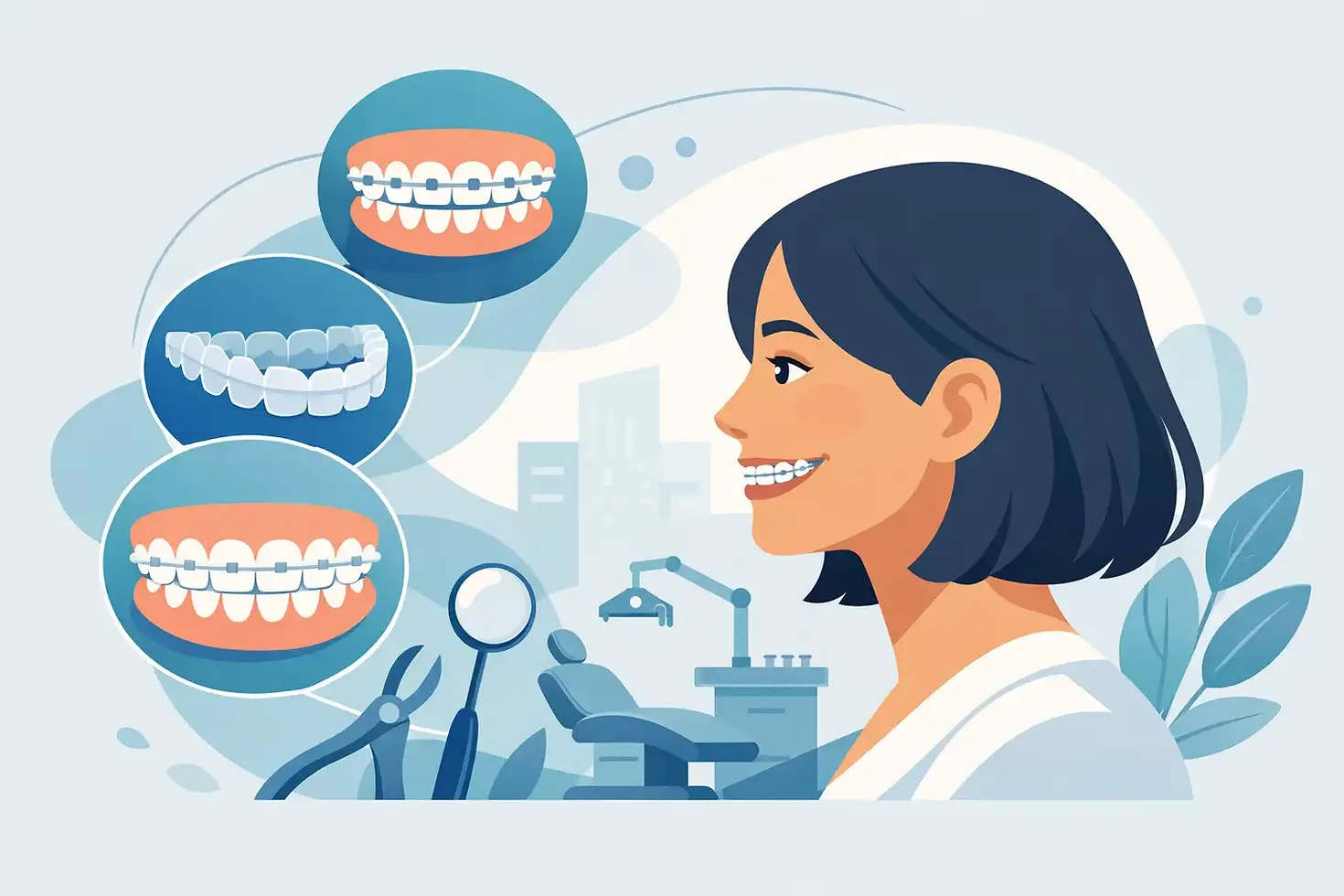
Adults usually have several orthodontic paths to consider. The most common are traditional metal braces, clear ceramic braces, and clear aligner treatment. In some cases, retainers or limited treatment may also be part of the discussion, especially if the issue is minor relapse after earlier orthodontic work.
Each option has strengths, and each comes with trade-offs. There is no single best choice for every adult. A board-certified orthodontist will look at the position of your teeth, jaw relationship, bite function, gum health, and treatment goals before recommending what will work most predictably.
Traditional metal braces
Metal braces remain one of the most effective tools in orthodontics. They use brackets and wires to move teeth with a high level of control, which makes them especially useful for moderate to complex issues such as significant crowding, bite correction, rotations, or vertical tooth movement.
Adults sometimes assume metal braces are outdated, but modern systems are smaller and more comfortable than older versions. They are dependable because they do not rely on being removed and reinserted correctly. If you want a treatment approach that stays on track without requiring daily decisions, metal braces can be a very practical option.
The trade-off is visibility. Even with smaller brackets, metal braces are still the most noticeable choice. Some adults are completely comfortable with that. Others prefer something more discreet for work, social settings, or photos.
Clear ceramic braces
Ceramic braces work much like metal braces, but the brackets are tooth-colored or clear, so they blend in more naturally. For adults who need the control of braces but want a less obvious appearance, ceramic braces can be a strong middle ground.
This option is popular with professionals and adults who want effective treatment without the look of full metal brackets. At the same time, ceramic braces require good care. The brackets are more esthetic, but certain elastic ties can stain if oral hygiene and diet are not managed well. They can also be a little more delicate than metal brackets in some situations.
Ceramic braces are often a good fit when appearance matters but case complexity still calls for the precision of fixed appliances.
Clear aligner treatment
Clear aligners use a series of custom-made trays to gradually move teeth. They are removable, nearly invisible, and easy to take out for meals and brushing. For many adults, that convenience is the biggest advantage.
Aligners can be an excellent option for mild to moderate crowding, spacing, and some bite issues. They are especially appealing if you want fewer food restrictions and a treatment style that fits neatly into a busy routine. With digital planning and modern orthodontic technology, aligner treatment has become much more precise than many people realize.
The biggest trade-off is compliance. Aligners only work well if they are worn as directed, usually around 20 to 22 hours per day. If you frequently remove them and forget to put them back in, treatment can slow down or become less predictable. Some more complex tooth movements may also be better managed with braces.
How to choose among adult braces treatment options
The best treatment is not always the least visible one, and it is not always the fastest-sounding one either. The right choice balances clinical needs with real life.
If your case involves significant bite correction, severely rotated teeth, or movements that require close control, braces may offer the most efficient and predictable path. If your concerns are mild to moderate and you are highly consistent, clear aligners may be a great fit. If appearance is a major factor but your orthodontic needs point toward fixed treatment, ceramic braces often make sense.
A good consultation should leave you with a clear understanding of what is possible, what is realistic, and what trade-offs come with each approach. That kind of clarity matters, especially for adults who are making a personal investment in treatment.
What adults should think about before starting
Orthodontic treatment in adulthood is a little different from treatment in the teen years. Teeth still move very well in adults, but the surrounding dental conditions may be more complex. Existing crowns, fillings, gum recession, worn enamel, missing teeth, or past dental work can all influence planning.
That does not mean treatment is harder than it should be. It means it should be carefully customized. A specialist in orthodontics is trained to evaluate these details and coordinate movement safely and efficiently.
Appearance and lifestyle
If you spend a lot of time in client-facing meetings, on video calls, or in public speaking roles, appliance visibility may matter more to you than it does to someone else. That is a personal decision, not a clinical one. Many adults choose metal braces and do very well. Others strongly prefer aligners or ceramic braces because they want treatment to be less noticeable.
Lifestyle also matters in a practical sense. If you snack frequently, travel often, or know you are unlikely to wear removable trays consistently, braces may be easier. If you value being able to remove your appliance for meals and brushing, aligners may feel more convenient.
Treatment time
Adults often ask which option is fastest. The honest answer is that treatment time depends more on your bite and tooth movement needs than on marketing claims. Some cases finish efficiently with aligners. Others move better with braces. In any system, staying on schedule, keeping appointments, and following instructions plays a big role.
Short-term promises can sound appealing, but precision matters more than rushing. A well-finished result tends to be worth the time.
Comfort and adjustment
Most orthodontic treatment involves periods of pressure and adjustment, especially after appliances are placed or changed. That is normal. Adults often adapt quickly, though the first week can take some getting used to.
Braces can irritate the cheeks and lips at first, while aligners may create temporary pressure when switching to a new tray. Neither should feel unmanageable. Today’s techniques and materials are designed with comfort in mind, and your orthodontic team should help you know what to expect.
Cost and long-term value
Cost varies based on treatment type, case complexity, and length of care. Clear aligners and ceramic braces may cost more than traditional metal braces in some cases, but value is not just about the initial fee. It is about choosing a treatment that can deliver the result you want with a high level of predictability.
Adults also need to factor in retention after treatment. Teeth can shift at any age, so retainers are part of protecting your investment. Ongoing maintenance is not an extra detail. It is part of successful orthodontic care.
Why specialist care matters for adults
Adults often have more nuanced treatment goals than younger patients. You may want cosmetic improvement, bite correction, better function, or all three. You may also be balancing work, parenting, travel, and a full calendar. That is why expert planning and efficient treatment matter.
A dedicated orthodontic practice brings focused training, treatment experience, and technology built around tooth movement and bite correction. Digital impressions, 3D treatment planning, and closely monitored progress can make the process more precise and more comfortable. At Dixon Orthodontics, that combination of specialized care and personal attention is a big part of helping adults feel confident about starting treatment.
A good consultation should feel clear, not confusing
If you are considering orthodontic care, the first step should not feel overwhelming. A strong consultation helps you understand whether your concerns are mild, moderate, or more complex, which treatment options are appropriate, and what kind of result you can expect.
You should come away knowing why a certain option is being recommended, not just what it costs. That level of explanation builds trust, and it helps you choose with confidence.
Adult orthodontic treatment is not about fitting into a standard plan. It is about finding the approach that works for your teeth, your bite, and your life now - not ten years ago. The right option is the one that gives you a healthy, lasting result and feels realistic enough to follow through on.


Comments