
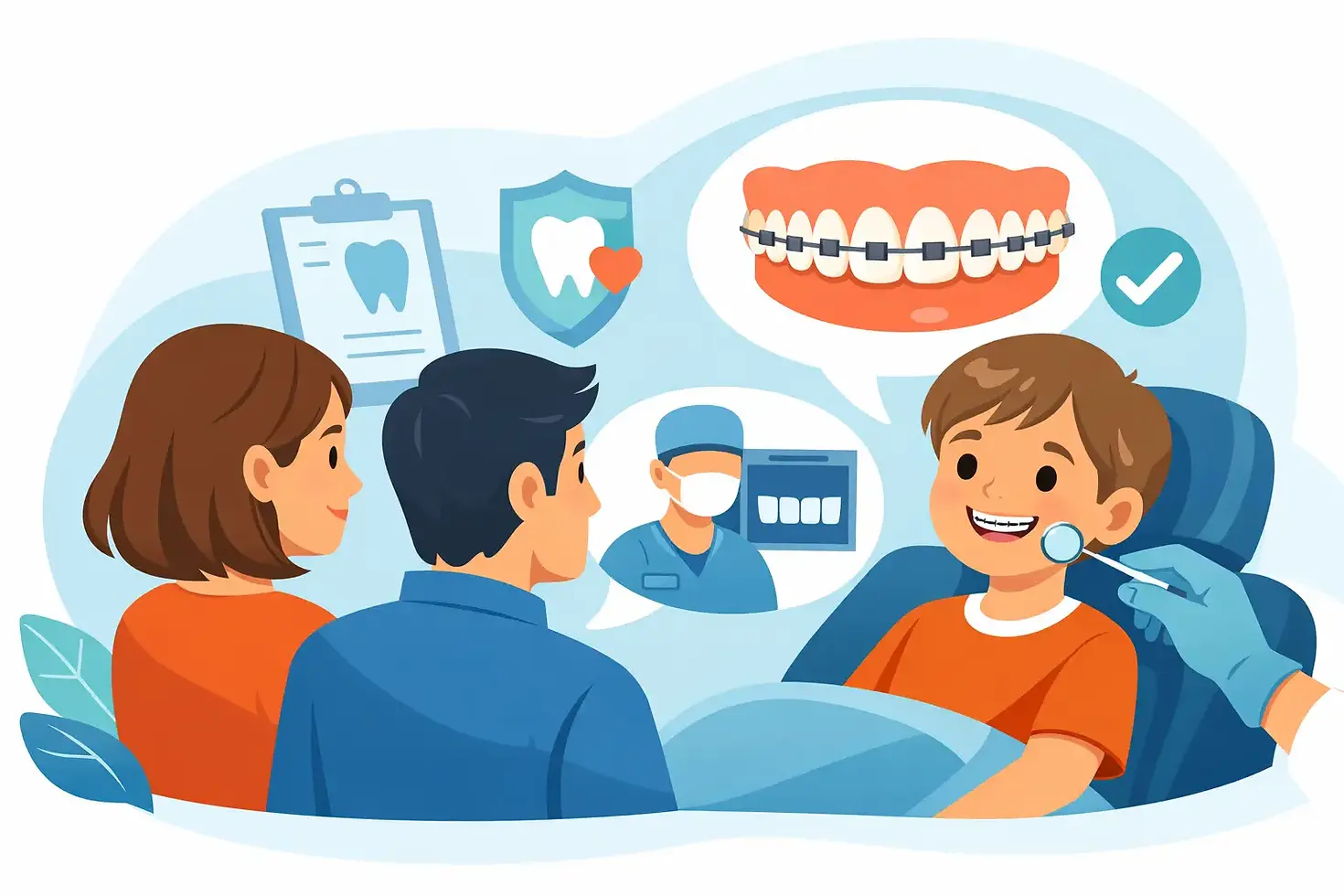
Braces for 8 Year Old: What Parents Should Know

An 8-year-old with crooked teeth does not always need braces right away - but sometimes waiting is not the best choice either. That is why so many parents ask about braces for 8 year old children after a dentist mentions crowding, a bite issue, or teeth coming in the wrong place. The key is not age alone. It is whether your child is showing signs that early orthodontic treatment could guide growth and prevent bigger problems later.
At this age, children are in a transition stage. They usually have a mix of baby teeth and permanent teeth, and the jaws are still developing. That combination gives an orthodontist a valuable window to spot problems early and, in some cases, correct them more efficiently than if treatment starts years later.
Do 8-year-olds usually get braces?
Sometimes, but not as often as parents expect. Most children do not start full braces at 8. What is more common is an orthodontic evaluation to determine whether monitoring is enough or whether early treatment would be helpful.
The American Association of Orthodontists recommends an orthodontic checkup by age 7 for this reason. An early exam does not mean a child will need treatment right away. It means a specialist can evaluate how the teeth and jaws are developing and create a plan based on what is happening now, not just what might happen later.
For some children, the right plan is simple observation. For others, early intervention can reduce the severity of future crowding, correct a harmful bite pattern, or help permanent teeth come in more normally.
When braces for 8 year old patients make sense
Early orthodontic treatment is often called Phase 1 treatment. Its goal is not always to create the final perfect smile in one step. More often, it addresses a specific developmental problem while a child is still growing.
A board-certified orthodontist may recommend treatment around age 8 if a child has a crossbite, severe crowding, protruding front teeth, jaw growth imbalance, impacted teeth, or oral habits that are affecting tooth position. Some children also benefit from treatment if they have trouble biting comfortably, speech issues related to tooth position, or a bite that is causing uneven wear.
In these cases, timing matters. Guiding growth at the right stage can be more effective than trying to correct the same issue after the jaws have developed further. That said, early treatment is not automatically better. If the problem can be treated just as well later, many orthodontists will recommend waiting.
Signs parents should watch for
Parents usually notice the obvious things first, like crooked front teeth. But alignment alone is only part of the picture. Bite function and jaw development matter just as much.
It is worth scheduling an orthodontic evaluation if your child has early or late loss of baby teeth, difficulty chewing, mouth breathing, thumb sucking beyond the early years, teeth that stick out significantly, upper and lower teeth that do not fit together properly, or a jaw that shifts when opening and closing. Crowding, teeth erupting in unusual positions, and frequent cheek biting can also be signs that a closer look is needed.
Sometimes there is no clear symptom at all. A child may seem comfortable, but an orthodontist can still see patterns in jaw growth and eruption that suggest a future issue. That is one reason specialized evaluation matters.
What treatment might look like at age 8
When parents hear the word braces, they often picture a full set of metal brackets on every tooth. For an 8-year-old, treatment may look different.
Some children do wear partial braces on a limited number of teeth. Others may need an expander, a space maintainer, or another appliance designed to guide jaw development and tooth eruption. In certain situations, early braces are used to correct a specific problem and then removed, followed by a period of monitoring until all permanent teeth come in.
This is where individualized care matters. Two children the same age can have very different needs. One may need immediate treatment for a crossbite that affects jaw function. Another may have mild crowding that is better addressed once more adult teeth erupt.
Modern orthodontic technology helps make this process more precise. Digital imaging and detailed treatment planning allow orthodontists to evaluate how the teeth, roots, and jaws are developing and choose the right timing with greater confidence.
Benefits of early treatment
When early treatment is truly indicated, it can do more than straighten teeth. It can create space for erupting permanent teeth, reduce the risk of trauma to protruding front teeth, improve bite function, and support healthier jaw development.
For some families, another benefit is simplicity. Addressing a problem early may shorten or simplify later treatment, even if a second phase is still needed in the teen years. It can also help avoid situations where a more severe problem becomes harder to correct over time.
There are emotional benefits too. If a child is already self-conscious about very prominent or crowded teeth, early treatment can improve confidence during important school-age years.
Still, there are trade-offs. Starting too early without a clear reason can mean longer overall treatment time. That is why responsible orthodontic care is not about putting braces on every child who walks in. It is about knowing when action helps and when observation is the smarter choice.
Are there downsides to starting braces at 8?
There can be. Children this age are still developing routines, and orthodontic treatment requires cooperation. Brushing around brackets, avoiding certain foods, keeping appointments, and wearing appliances as directed all take consistency.
There is also the question of timing. If treatment begins before the right teeth have erupted or before a growth pattern becomes clear, a child may still need additional treatment later. That does not mean the first phase was unnecessary, but it does mean parents should understand the full plan from the beginning.
Cost is another practical factor. Some early treatments are a smart investment because they prevent more complex correction later. Others may not offer enough benefit to justify starting right away. A good orthodontic consultation should explain that honestly.
How an orthodontist decides whether to treat now or wait
The decision comes down to diagnosis, not guesswork. An orthodontist will look at tooth eruption, jaw growth, bite relationship, airway and oral habits, spacing, crowding, and whether the problem is likely to get worse if left alone.
They also consider your child as a person. Can your child handle appliances responsibly? Is there discomfort or functional trouble now? Are there signs that early intervention would protect long-term oral health?
This is one reason many families prefer a dedicated orthodontic practice over a general dental office for this decision. Orthodontists receive advanced training in tooth movement and facial development, and that specialization matters when timing is part of the treatment itself.
What parents can expect at the first visit
A first orthodontic consultation is usually straightforward and reassuring. The orthodontist will examine your child’s teeth and bite, review images, and explain whether treatment is recommended now, later, or not at all.
If treatment is needed, the conversation should be clear. Parents should understand the problem being treated, why this is the right time, what kind of appliance is recommended, how long treatment may take, and whether a second phase is likely in the future.
This is also a good time to ask practical questions about comfort, eating, oral hygiene, school and sports, and appointment frequency. Families often feel better once they realize that early orthodontic care is usually very manageable with the right support.
At Dixon Orthodontics, that kind of conversation is part of what families value most - expert guidance that feels personal, not rushed.
Braces for 8 year old children and the bigger picture
Parents often want a simple yes or no answer. Should an 8-year-old get braces? Sometimes yes. Often not yet. The better question is whether your child would benefit from an orthodontic evaluation now.
That evaluation can bring peace of mind even if no treatment starts right away. You learn what is normal, what needs monitoring, and what signs would make treatment more urgent later. And if early care is recommended, you can move forward knowing there is a clear reason behind it.
If your child is 8 and you are noticing crowding, bite concerns, or teeth coming in irregularly, trust your instincts and get a specialist’s opinion. The right timing can make treatment easier, more effective, and more comfortable for your child. Sometimes the best next step is braces. Sometimes it is simply a careful plan to watch growth and be ready when the time is right.


Comments