

What Does Free Braces Consultation Mean?
- Gary Dixon
- Apr 19
- 6 min read

If you have been told your child may need braces, or you have been thinking about straightening your own teeth, one phrase tends to come up right away: what does free braces consultation mean? For many families, it sounds helpful but also a little vague. Is it a quick sales pitch, or is it a real clinical appointment with useful answers?
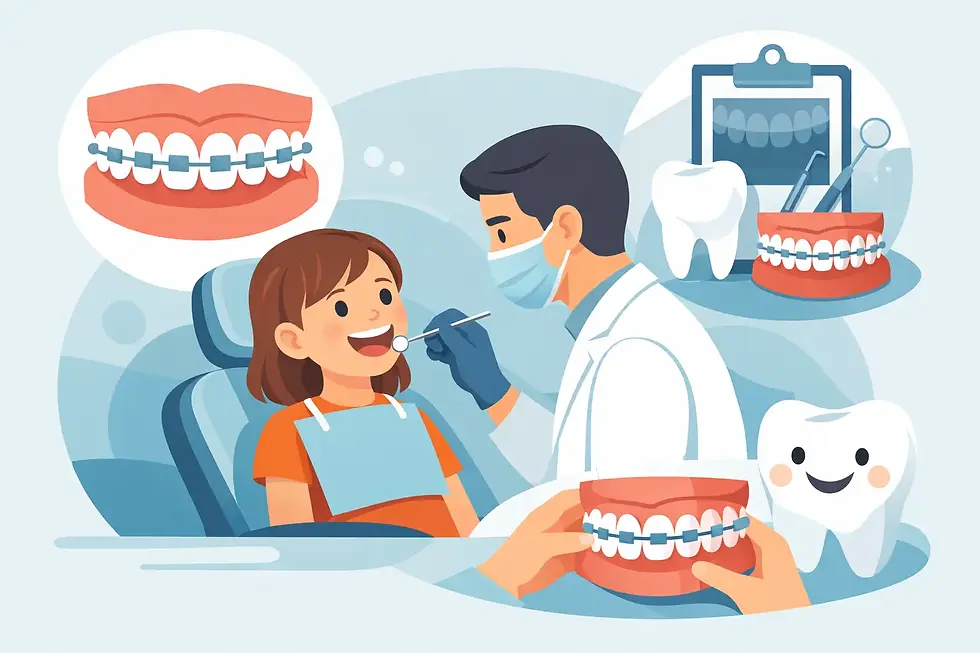
Most of the time, a free braces consultation is a no-cost first visit with an orthodontic office to evaluate your smile, discuss concerns, and explain possible treatment options. It is designed to help you understand whether treatment is needed, what type of treatment may work best, and what the next steps could look like before you commit to anything.
That simple definition helps, but the details matter. Not every office structures consultations exactly the same way, and knowing what is typically included can make you feel more prepared and more confident.
What does free braces consultation mean at an orthodontist?
In practical terms, it usually means you can meet with an orthodontic specialist without paying an exam fee for that first appointment. The goal is to gather information, answer your questions, and give you a professional opinion about your teeth, bite, and smile.
This visit often includes an initial exam, a conversation about your goals, and a recommendation for treatment if treatment is appropriate. For a child, that might mean monitoring growth for now, planning braces later, or starting early interceptive treatment. For a teen or adult, it could mean braces, clear aligners, retainers, or sometimes no treatment at all.
The key point is that free refers to the consultation itself, not necessarily every record, image, or future service. Many orthodontic practices include quite a bit at no cost during that first visit, but it is always fair to ask exactly what is covered.
What is usually included in a free braces consultation?
A good consultation should feel informative, not rushed. In many orthodontic offices, the first visit includes a review of your dental and medical history, a visual exam of the teeth and bite, and a discussion with the orthodontist about what they see.
Depending on the office and the case, the consultation may also include digital photos, X-rays, or a digital scan of the teeth. Modern orthodontic practices often use digital impressions and imaging technology to make the process more comfortable and more precise. That can be especially helpful for parents who want a clear explanation of what is happening with their child’s bite, or for adults who want to understand treatment options without the mess of traditional impressions.
You can also expect a conversation about timing. Sometimes the right answer is to begin treatment soon. Sometimes the better answer is to wait six months or a year and monitor changes. A trustworthy orthodontic consultation should make room for that kind of honesty.
What a free braces consultation does not usually mean
This is where expectations matter. Free consultation does not always mean free full records, free braces, or a complete start to treatment. It usually does not include placing braces, delivering aligners, or beginning active care that same day unless you decide to move forward and the office is set up for it.
It also does not mean every orthodontic problem can be fully diagnosed in five minutes. Some cases are straightforward. Others need more detailed records, additional imaging, or coordination with a general dentist or another dental specialist.
That is not a red flag by itself. Orthodontics is personalized care, and a careful office will sometimes say, “Here is what we know today, and here is what we need to confirm before treatment starts.” That is often a sign of thoroughness, not hesitation.
Why orthodontic offices offer free consultations
There is a practical reason and a patient-centered reason.
From the patient side, braces and aligner treatment are a significant decision. Families want to understand costs, treatment length, comfort, and whether the provider feels like the right fit. A free consultation lowers the barrier to getting expert guidance, especially when you are still deciding whether treatment is necessary.
From the practice side, consultations are an opportunity to meet new patients, build trust, and show how they approach care. Orthodontic treatment lasts months or years, so that first visit matters. You are not just evaluating whether you need braces. You are also evaluating the team, the communication style, and whether you feel comfortable returning.
That is one reason many families prefer seeing a dedicated orthodontic practice instead of trying to sort through treatment questions in a general dental setting. Orthodontists focus specifically on tooth movement, bite alignment, and long-term smile correction.
What happens during the appointment
Most consultations follow a fairly simple flow. You arrive, complete any needed forms, and meet the team. Then the orthodontist or clinical staff gathers information about your concerns. Maybe your child has crowding, an underbite, or spacing. Maybe you had braces years ago and your teeth shifted. Maybe you are interested in clear aligners but are not sure if you are a candidate.
Next comes the clinical evaluation. The orthodontist checks how the teeth fit together, how the jaws relate, whether there is crowding or spacing, and whether there are signs that treatment could improve function as well as appearance. This matters because orthodontic care is not only about straight teeth. It can also affect bite balance, wear patterns, oral hygiene, and comfort.
After that, you should get a recommendation in plain language. A strong consultation does not bury you in technical terms. It explains what is happening, why it matters, and what options make sense. If more than one option is possible, you should hear the trade-offs. For example, braces may offer more control in one case, while clear aligners may fit another patient’s lifestyle better.
Finally, if treatment is recommended, the office may review estimated timing, fees, insurance, and payment options. That financial conversation is often part of the free consultation because people need the full picture before making a decision.
Questions worth asking at a free braces consultation
A consultation is not just for the office to assess you. It is your chance to assess the office too.
Ask who will oversee treatment and whether the orthodontist is board certified. Ask what treatment options are available for your specific case, and whether there are reasons to choose one over another. If you are a parent, ask whether treatment should begin now or if observation is the better plan.
You can also ask practical questions that matter over the long term. How often are visits scheduled? What happens if brackets break or trays are lost? Will retainers be part of the final plan? How does the office use technology to improve comfort and accuracy?
These questions can tell you a lot about how personalized the care will be.
What does free braces consultation mean for adults?
For adults, the phrase often carries an extra layer of hesitation. Many adults worry they are too old for treatment, that braces will be overly noticeable, or that the process will disrupt work and family life.
A free consultation gives you a low-pressure way to get real answers. Sometimes adults are excellent candidates for clear aligners. In other cases, braces may still be the most effective option. The right recommendation depends on your bite, tooth movement needs, goals, and how much compliance a removable system will realistically get.
Adult treatment can be very successful, but it is not identical to treatment in younger patients. Bone biology, existing dental work, gum health, and long-term maintenance all matter. That is why a specialist evaluation is helpful before you make assumptions.
What does free braces consultation mean for kids and teens?
For parents, timing is often the biggest source of confusion. A free consultation can help determine whether your child is simply due for monitoring or whether there is a problem that is easier to address during growth.
Not every child who comes in for a consultation needs braces right away. In fact, one of the most reassuring outcomes can be hearing that treatment is not needed yet. An orthodontist may recommend periodic observation so they can track eruption, jaw development, and bite changes.
For teens, the consultation often focuses on readiness, treatment choices, and how orthodontic care will fit into school, sports, and daily life. The best visits leave both parents and teens feeling informed rather than pressured.
How to tell if a free consultation is actually valuable
A valuable consultation leaves you with clarity. You should walk out understanding whether treatment is recommended, what your options are, what the likely timeline could be, and what financial planning may be involved.
It should also feel personal. Orthodontic care works best when the treatment plan matches the patient, not when every patient hears the same pitch. Families in Westminster and Superior often want the same thing from a first visit: expertise they can trust, explanations they can understand, and a team that treats them like people, not numbers.
That is where a specialist office can make a real difference. At Dixon Orthodontics, the goal of a free consultation is not simply to fill a schedule. It is to give patients and families a clear, comfortable place to start.
If you have been putting off that first visit because the phrase sounded too vague or too good to be true, the simplest way to think about it is this: a free braces consultation is your opportunity to get expert answers before making a long-term decision, and that kind of clarity is often the most valuable part of treatment.


Comments