
What Is Clear Aligner Treatment?

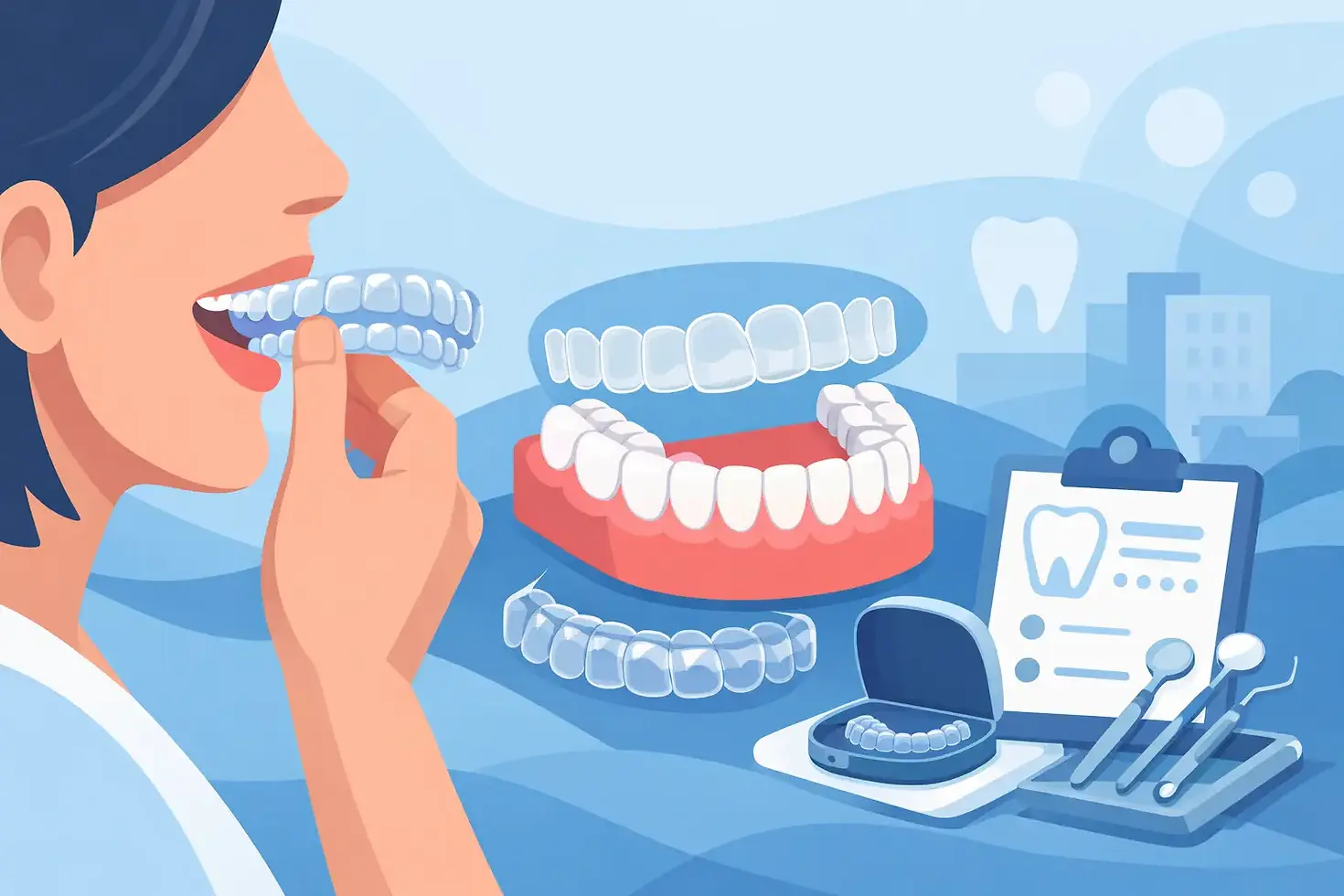
A lot of people ask this after seeing nearly invisible trays online or hearing a friend say they are "doing aligners instead of braces." So, what is clear aligner treatment? It is an orthodontic treatment that uses a series of custom-made, removable trays to gradually move teeth into better position. Each set of aligners is designed to make small, controlled changes over time, helping improve both the look of the smile and the way the bite fits together.
For many teens and adults, that sounds appealing because the trays are discreet and easy to remove for meals and brushing. But clear aligners are not just cosmetic. When planned and monitored by a trained orthodontic specialist, they can address crowding, spacing, and certain bite issues with a high level of precision.
What is clear aligner treatment and how does it work?
Clear aligner treatment starts with a detailed evaluation of the teeth, bite, and jaw relationship. This step matters more than most people realize. Two people may both have crooked front teeth, but the reason behind that crowding can be very different. One patient may have a simple alignment issue, while another may also have a crossbite, deep bite, or tooth rotations that need more careful control.
After the exam, digital scans or impressions are used to create a 3D model of the teeth. From there, a series of aligners is made to fit the teeth at each stage of movement. Patients wear each set for a prescribed amount of time, usually around one to two weeks, before switching to the next set.
The trays apply gentle pressure to specific teeth. That pressure encourages the bone around the teeth to remodel, allowing the teeth to move gradually. It is a biologic process, not a quick cosmetic trick, which is why supervision and follow-up appointments are still important even though the appliances are removable.
In some cases, small tooth-colored attachments are placed on certain teeth to help the aligners grip and guide movement more effectively. Some patients also need elastics or minor enamel shaping between teeth to create space. Those details depend on the case, and they are part of what makes orthodontic treatment more individualized than many people expect.
What clear aligners can treat
Clear aligners can be very effective for mild to moderate orthodontic concerns, and in some cases they can treat more complex problems as well. They are commonly used for crowded teeth, gaps between teeth, minor bite correction, and relapse after previous orthodontic treatment. Adults who had braces years ago and notice shifting often ask about aligners for this reason.
That said, not every case is best treated with clear trays alone. Some significant bite issues, severe rotations, impacted teeth, or growth-related concerns in children may be better suited to braces or a phased treatment plan. This is one of the biggest reasons it helps to see an orthodontic specialist rather than assume every patient is a candidate for the same appliance.
The right question is often not, "Do I want braces or aligners?" It is, "What treatment will move my teeth safely and predictably?" Sometimes the answer is clear aligners. Sometimes it is braces. Sometimes it is a combination approach.
Why patients choose clear aligner treatment
The biggest reason patients ask about aligners is appearance. The trays are much less noticeable than metal braces, which can be a major advantage for working adults, teens involved in activities, or anyone who prefers a low-profile option.
Comfort is another common factor. While aligners still create pressure as teeth move, many patients like that there are no brackets or wires rubbing against the cheeks. The trays are also removable, which means eating is simpler and brushing and flossing can stay closer to normal.
That convenience comes with responsibility. Clear aligners only work well if they are worn as directed, usually 20 to 22 hours a day. If they sit in a case for long stretches, treatment can slow down or become less predictable. For motivated patients, that trade-off is often worth it. For others, braces may actually be the easier path because they do not depend on daily compliance in the same way.
What treatment feels like day to day
Most patients feel pressure for the first day or two after switching to a new set of aligners. That pressure is a sign the trays are working. It usually fades as the teeth adjust. Speech can sound slightly different at first, but most people adapt quickly.
The routine is straightforward. You remove the aligners to eat and drink anything other than water, then brush before putting them back in. You will also need to clean the trays regularly so they stay clear and fresh.
For busy families, this routine can be a plus because there are fewer food restrictions than with braces. For younger patients, though, keeping track of the aligners takes maturity. Lost trays, skipped wear time, and inconsistent cleaning can all affect progress.
How long does clear aligner treatment take?
Treatment length depends on the complexity of the case and how consistently the aligners are worn. Some patients finish in several months, while others need a year or longer. Minor alignment corrections may move more quickly. Bite correction and more involved tooth movement usually take more time.
It also depends on the goals. If someone only wants to improve the appearance of a few front teeth, treatment may be shorter than for a patient who also needs the bite adjusted for long-term function. That is why a personalized consultation is so helpful. The same appliance can be used for very different treatment plans.
What happens after treatment
This is a step people often underestimate. Teeth can shift after orthodontic treatment, whether you wore braces or aligners. That is why retainers matter.
Once active treatment is complete, patients typically wear retainers to help hold the new tooth positions. In many cases, this starts with more frequent wear and then transitions to nighttime wear. Long-term retention is part of protecting the investment you made in your smile.
For patients who had orthodontic treatment years ago and now notice movement, clear aligners may also be used as a retreatment option before new retainers are made. Ongoing maintenance is a real part of orthodontic care, not an afterthought.
What is clear aligner treatment compared with braces?
This is where honesty matters. Clear aligners are an excellent option for many patients, but they are not automatically better than braces. They are different tools, and each has strengths.
Aligners are more discreet, removable, and often easier for oral hygiene. Braces stay on full time, which can make them more effective for patients who do not want the responsibility of remembering wear time. Braces can also offer strong control for certain tooth movements and more complex bite issues.
For some patients, aligners fit their lifestyle beautifully. For others, braces provide a more reliable path. A specialist who offers both can recommend treatment based on your needs rather than trying to make every smile fit one system.
Why specialist oversight matters
Teeth do not move in isolation. Every adjustment affects the bite, the roots, and the supporting bone. That is why diagnosis and monitoring are a major part of successful orthodontic care.
A Board Certified Orthodontist has advanced training focused specifically on tooth movement and bite correction. That depth of expertise matters when treatment needs to be refined, when attachments or elastics are needed, or when a case looks simple at first but has more going on underneath.
Modern technology also plays a role. Digital impressions, 3D treatment planning, and precise appliance design can improve comfort and accuracy. At a practice like Dixon Orthodontics, that technology is paired with individualized care, so patients are not left to figure things out on their own.
Is clear aligner treatment right for you or your child?
It might be, but the answer depends on more than whether the trays look appealing. The best candidates are patients with goals that match what aligners can realistically do and with the consistency to wear them as instructed.
For adults, clear aligners can be a strong option for improving confidence and oral health without drawing much attention. For teens, they can work very well when there is good follow-through at home. For younger children, treatment planning may involve other orthodontic tools first, especially if jaw growth or eruption patterns are part of the concern.
The good news is that you do not have to sort that out alone. A consultation can clarify what is happening with the teeth and bite, what options make sense, and what kind of timeline to expect.
If you have been wondering whether clear aligners are a fit, the most helpful next step is not guessing based on photos online. It is getting an expert evaluation from someone who can match the treatment to the person, not just the trend.


Comments