
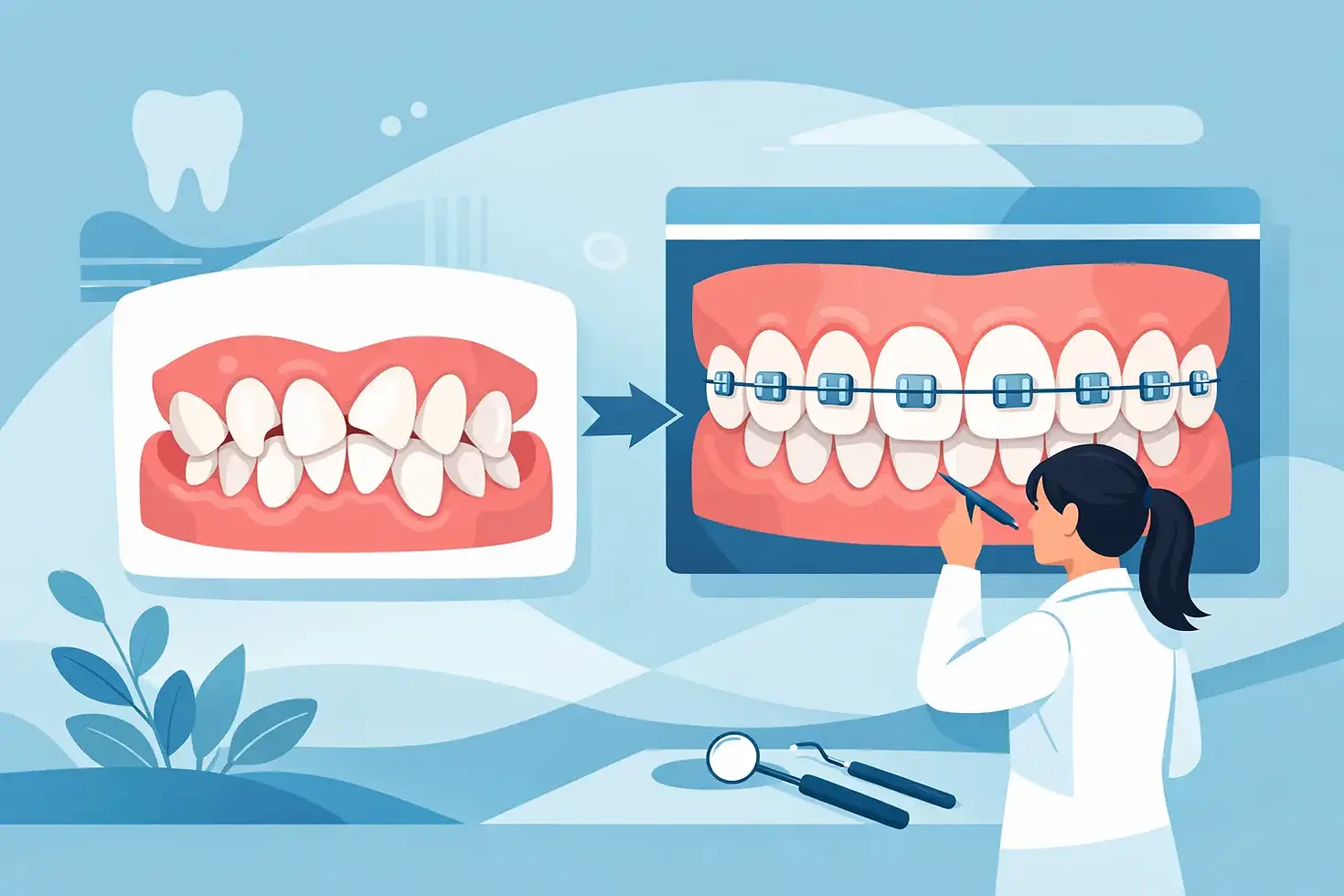
Braces for Crowded Teeth: What to Expect

When teeth overlap, twist, or push forward because there is not enough room in the jaw, the problem is more than cosmetic. Braces for crowded teeth are often recommended because crowding can make brushing and flossing harder, affect the bite, and lead to uneven wear over time. For many children, teens, and adults, orthodontic treatment creates the space and control needed to move teeth into healthier positions.
Crowding is one of the most common reasons people visit an orthodontist. Sometimes it is easy to spot in the front teeth. In other cases, the issue is developing farther back, where erupting teeth are competing for space and changing the way the whole bite fits together. That is why a specialist evaluation matters. The right treatment plan depends on how severe the crowding is, which teeth are involved, and whether the bite also needs correction.
Why crowded teeth happen
Crowded teeth usually happen because the teeth and jaws are mismatched in size. A person may have larger teeth, a narrower dental arch, or jaw development that leaves less room than the teeth need. Genetics often play a big role, which is why parents who needed orthodontic treatment sometimes notice similar patterns in their children.
Crowding can also become more noticeable as adult teeth come in. Baby teeth may appear fairly straight, then permanent teeth erupt larger and create overlap or rotation. In some patients, early tooth loss, retained baby teeth, or shifting after past orthodontic treatment can make spacing problems worse.
The severity of crowding matters. Mild crowding may involve a few teeth that are slightly rotated or tucked behind neighboring teeth. Moderate to severe crowding can affect multiple teeth, create bite interference, or leave certain teeth blocked out of the arch completely. Those cases often require more planning and more precise tooth movement.
How braces for crowded teeth work
Braces for crowded teeth apply steady, controlled force to guide teeth into better alignment over time. Brackets and wires work together to move each tooth gradually while also shaping the dental arches and improving how the upper and lower teeth meet.
One of the biggest benefits of braces is control. When teeth are significantly rotated, overlapping, or out of position, braces allow detailed adjustments that can be especially helpful in more complex crowding cases. Treatment is not just about lining up the visible front teeth. It is also about creating a functional bite and long-term stability.
In some cases, space can be created by widening the arch form within healthy limits, moving teeth into better positions, or using techniques that reduce pressure between teeth. In other cases, space concerns are more severe, and tooth removal may be part of the plan. That is not recommended lightly. It depends on facial balance, gum support, bite goals, and the amount of crowding present.
Are braces the best option for crowded teeth?
Sometimes yes, sometimes not. Braces are a strong option for crowded teeth because they are effective for mild, moderate, and many severe cases. They can also treat crowding alongside overbite, underbite, crossbite, and other orthodontic issues that may be contributing to wear or discomfort.
Clear aligners may also work for certain crowded teeth, especially in mild to moderate cases with the right compliance. The trade-off is that aligners depend on wear time and may not be the best fit for every patient or every tooth movement. For younger patients, or for adults with more complex crowding, braces may offer better predictability.
This is where specialist care makes a difference. A board-certified orthodontist can evaluate whether braces, aligners, or another approach will give the safest and most efficient result.
What treatment may involve
Mild crowding
If the crowding is mild, treatment may be relatively straightforward. A few rotated or overlapping teeth can often be aligned without major bite correction. In these cases, treatment may focus on creating just enough room for proper positioning while keeping the smile balanced.
Moderate to severe crowding
When crowding is more advanced, treatment often takes more coordination. Teeth may need to be untangled carefully before the bite can be refined. Some teeth may sit higher or lower than ideal, or be trapped out of the arch. These cases can still respond very well to braces, but they usually require more time and a detailed plan.
Crowding in children and teens
For younger patients, timing can matter. If crowding is developing early, an orthodontist may monitor growth and eruption patterns to decide whether early treatment is helpful. Not every child needs two phases of treatment, but some do benefit from intervention while the jaws are still developing. In other cases, waiting until more permanent teeth erupt is the better choice.
Crowding in adults
Adults often assume they missed their chance, but that is not true. Braces can be very effective for adults with crowded teeth. The main difference is that adult treatment may involve existing dental work, gum concerns, or long-standing bite wear that need to be considered during planning.
How long braces for crowded teeth take
Treatment time depends on the complexity of the case. Mild crowding may be corrected more quickly, while severe crowding or bite correction can extend treatment. Age, patient cooperation, oral hygiene, and how teeth respond biologically also affect timing.
A realistic estimate comes after an exam, digital imaging, and a review of the bite. Modern orthodontic technology helps make this process more precise. Digital impressions and 3D treatment planning can improve comfort during records collection and give a clearer picture of how the teeth are expected to move.
Patients often want to know when they will notice a difference. The answer is usually sooner than they expect. Visible improvement often starts early, but finishing the bite and positioning the roots properly takes longer. The last part of treatment matters just as much as the first.
Benefits beyond a straighter smile
Straightening crowded teeth can improve appearance, but the health benefits are just as important. Teeth that are less overlapped are usually easier to clean well. That can lower the risk of plaque buildup around tight areas and support healthier gums.
A better-aligned bite may also reduce uneven pressure on certain teeth. When teeth collide incorrectly or sit out of place, they can wear down in ways that are not ideal. Correcting crowding can help distribute forces more evenly and support long-term function.
For many patients, confidence changes too. They smile more easily in photos, at work, in school, and in everyday conversations. That emotional side should not be dismissed. Feeling comfortable with your smile can have a real effect on daily life.
What to expect during treatment
Braces do require commitment. Appointments are needed to monitor progress and make adjustments. There can be some soreness after changes, especially early on, but it is usually temporary. Good brushing, flossing, and food choices matter because braces create more places for plaque to collect.
Patients and parents also want to know if treatment will fit into busy schedules. In a well-run orthodontic practice, the process is designed to be organized and predictable. Clear communication, modern tools, and responsive follow-up can make a long treatment plan feel much more manageable.
That is one reason many families choose a dedicated orthodontic office rather than trying to address crowding through a general dental setting. Specialized training, focused experience, and technology built around tooth movement can make a meaningful difference in planning and results.
Life after braces for crowded teeth
Once braces come off, retainers are part of the plan. Teeth have a natural tendency to shift, especially after crowding has been corrected. Retainers help protect the result and keep the smile stable.
This stage is often underestimated, but it is essential. Finishing treatment well includes having a clear retention plan and ongoing support if a retainer needs repair or replacement later on. Orthodontic care does not stop the day the braces come off.
For families in Westminster and Superior, working with a practice that provides both active treatment and long-term follow-up can make that transition easier. At Dixon Orthodontics, that continuity is part of what helps patients feel cared for from the first consultation through retention.
If you or your child has crowded teeth, the most helpful first step is not guessing which treatment sounds best. It is getting a careful orthodontic evaluation from a specialist who can explain what is happening, what options make sense, and what kind of result is realistic. A well-planned smile is not just straighter. It is easier to maintain, more comfortable to live with, and built to last.


Comments