
Digital Impressions for Braces Explained

That first orthodontic visit often comes with one question people do not always ask out loud: Will they have to do those messy molds? For many patients, digital impressions for braces are the moment modern orthodontics starts to feel a lot more comfortable.
Instead of biting into a tray filled with putty and waiting for it to set, a digital scanner captures a detailed 3D image of the teeth and bite. It is faster, cleaner, and easier for most children, teens, and adults. More importantly, it gives your orthodontist a highly precise view of what is happening in your smile before treatment begins.
What are digital impressions for braces?
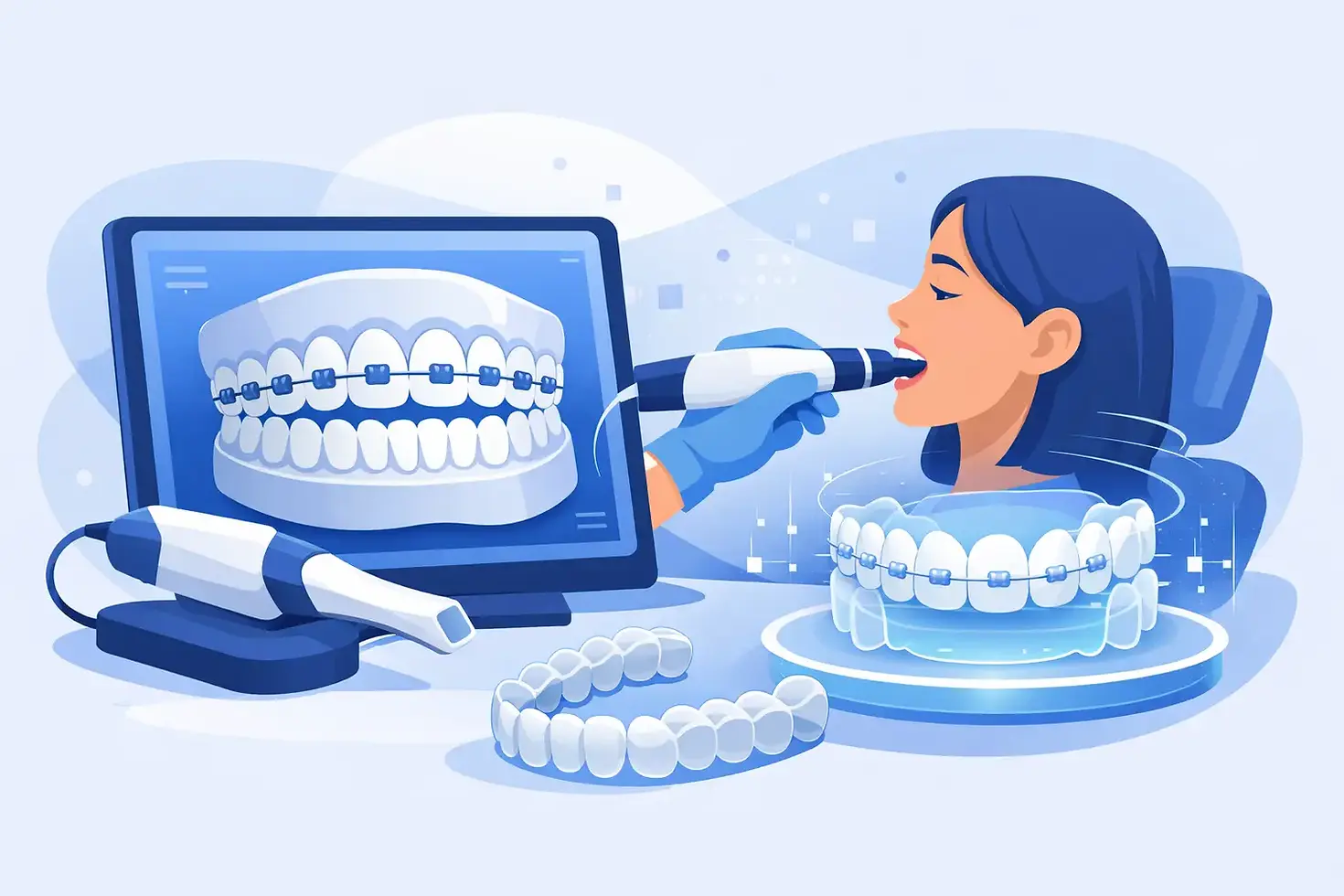
Digital impressions for braces are 3D scans of the teeth, gums, and bite taken with a small handheld wand. As the scanner moves around the mouth, it creates a detailed digital model on a screen in real time.
That model can be used to plan braces treatment, monitor progress, and create appliances such as retainers. In an orthodontic office focused on specialty care, this technology is not just about convenience. It supports more accurate diagnosis and more personalized treatment planning.
For parents, it can also make the consultation easier to understand. Seeing a child’s bite on a screen is often clearer than trying to picture it from a traditional mold. For adults, it helps make the process feel more efficient and a little less intimidating.
Why digital impressions matter in orthodontics
Braces treatment is built on small movements. Teeth shift gradually, and the success of treatment depends on careful planning from the start. When your orthodontist has a clear digital model of the bite, they can evaluate spacing, crowding, rotations, and alignment with excellent detail.
Traditional impressions can still work, but they have limitations. They can be uncomfortable for patients with a strong gag reflex, and the material can distort if there is movement or air bubbles. If the impression is not ideal, it may need to be repeated.
Digital scanning reduces many of those issues. The image appears immediately, so if an area needs another quick pass, it can be corrected on the spot. That efficiency helps save time and can reduce stress, especially for younger patients.
The patient experience: what to expect
For most people, the scanning process is straightforward. The orthodontic assistant or doctor uses a compact scanner to move around the teeth, usually starting with one arch and then the other. The tip does not involve trays of impression material, and there is no need to sit still waiting for anything to harden.
You may notice the scanner gently moving along the teeth and gumline while the image builds on the monitor. The process typically takes only a few minutes, although timing can vary based on the complexity of the case and how easily the patient can stay open.
Kids often handle digital scans better than traditional molds because there is less mess and less discomfort. Teens tend to appreciate the speed. Adults usually like that the process feels more modern and precise. If you have had unpleasant impressions in the past, digital scanning is often a welcome change.
How digital impressions help braces treatment
A good braces result depends on more than placing brackets on teeth. It starts with understanding how the teeth fit together, how the jaws relate, and where movement needs to happen over time. Digital models help your orthodontist study those details closely.
This can be especially useful when treatment involves crowding, bite correction, spacing, or planning around erupting teeth in younger patients. Digital scans also help with communication. Patients can often see what the orthodontist sees, which makes recommendations easier to follow.
In some offices, digital impressions also connect to other advanced tools, including 3D printing and appliance fabrication. That can support the creation of retainers and other orthodontic devices with a high level of consistency. It does not replace the orthodontist’s clinical judgment, but it gives them better information to work from.
Are digital impressions more accurate than molds?
In many orthodontic situations, digital impressions are highly accurate and very reliable. They are particularly helpful for capturing detailed tooth surfaces and producing precise digital models for planning and appliance design.
That said, accuracy depends on the technology being used and the skill of the team using it. Orthodontic specialization matters here. A board-certified orthodontist is trained to interpret the scan in the context of bite function, facial balance, and long-term tooth movement, not just collect an image.
There are also occasional situations where traditional methods or additional records may still be needed. X-rays and photographs remain important parts of diagnosis, and some complex cases benefit from multiple types of records. Good orthodontic care is not about using technology for its own sake. It is about using the right tools to make treatment better.
Digital impressions for braces in kids, teens, and adults
The benefits of digital impressions are broad, but they show up a little differently depending on the patient.
For children, comfort matters. A child who feels nervous during an appointment may struggle with traditional impressions. Scanning is often easier to tolerate, which can help the first experience in the office go more smoothly.
For teens, treatment is often about both function and confidence. Digital models can help them understand what is changing and why braces are recommended. When patients can actually see the crowding or bite issue, the plan tends to make more sense.
For adults, convenience and precision are usually top priorities. Many adults are balancing work, family, and long-term dental goals. A cleaner, faster process feels like a better fit for busy schedules, and the technology can reinforce confidence that treatment is being planned carefully.
What digital impressions do not change
Digital scanning improves the records process, but it does not make every orthodontic decision automatic. You still need a full evaluation by a dedicated orthodontic specialist.
A scan cannot replace experience. It does not decide whether a child is ready for treatment, whether extractions should be considered, or how bite correction should be managed over time. Those decisions come from training, careful diagnosis, and ongoing monitoring.
It is also worth remembering that braces treatment is still a partnership. Technology can improve comfort and accuracy, but results also depend on keeping appointments, following instructions, protecting appliances, and wearing retainers after treatment.
Why specialty care makes a difference
There is a real difference between having advanced tools and knowing how to use them well in orthodontic care. Digital impressions are most valuable when they are part of a complete treatment approach led by a doctor who focuses specifically on tooth movement and bite alignment.
That is one reason many families and adults prefer an orthodontic practice over a general dental office for braces. The technology matters, but so does the depth of expertise behind it. When you combine digital scanning with individualized care, detailed treatment planning, and dependable follow-up, the experience tends to feel more reassuring from start to finish.
At Dixon Orthodontics, that combination of modern technology and family-centered care is central to how patients are treated. For people in Westminster and Superior, that means access to specialty orthodontic care that is both advanced and personal.
Questions to ask at your consultation
If you are comparing orthodontic providers, ask how they take records for braces, whether they use digital scanning, and how those scans help guide treatment. It is also reasonable to ask who reviews the records, how treatment options are explained, and what kind of follow-up support you can expect after braces come off.
Those questions matter because orthodontic care is not a one-visit service. It is a process that unfolds over months or years, depending on the case. You want a practice that makes you feel informed, comfortable, and confident at every stage.
For many patients, digital impressions are one of the first signs that orthodontic treatment has become more comfortable than they expected. If you are considering braces for yourself or your child, it is worth choosing a team that pairs that technology with genuine expertise and a warm, local approach to care. A better start often leads to a better experience all the way through treatment.


Comments