

What Happens at an Orthodontic Consultation for Kids
- Gary Dixon
- Jul 31
- 5 min read

A front tooth that turns in, a noticeable gap, or a bite that seems uneven can raise a reasonable question: should we wait, or should we have it checked now? An orthodontic consultation for kids is designed to give parents a clear, pressure-free answer. It is not a commitment to braces. It is an opportunity to understand how your child’s teeth and jaws are developing and whether treatment would help now, later, or not at all.
For families in Westminster and Superior, the goal is simple: get expert guidance early enough to protect your child’s options, without starting treatment before it is needed.
Why an Orthodontic Consultation for Kids Can Start Before Braces
Many parents are surprised to learn that an orthodontic evaluation can be useful while a child still has baby teeth. That does not mean every child needs early treatment. In fact, many children benefit most from periodic monitoring until more permanent teeth come in.
The value of an early visit is knowing what is developing beneath the surface. A Board Certified Orthodontist evaluates more than whether teeth look straight. The consultation considers jaw growth, the way upper and lower teeth meet, the amount of room available for adult teeth, and habits that may affect development.
A child may appear to have only mild crowding today, but the developing bite can suggest whether that crowding is likely to improve, remain stable, or become more complex. On the other hand, a child with a visible spacing issue may simply be in a normal stage of dental development. A specialist can help families tell the difference.
Early evaluation is especially helpful when a child has lost baby teeth unusually early or late, has difficulty biting or chewing, breathes through the mouth often, sucks a thumb beyond the preschool years, or has teeth that protrude significantly. These signs do not automatically mean treatment is necessary, but they are worth a closer look.
What Happens During an Orthodontic Consultation for Kids
A consultation should feel informative and welcoming, not overwhelming. Your child will meet a team that works with growing smiles every day, while you have time to ask questions and talk through your concerns.
A careful look at teeth, bite, and growth
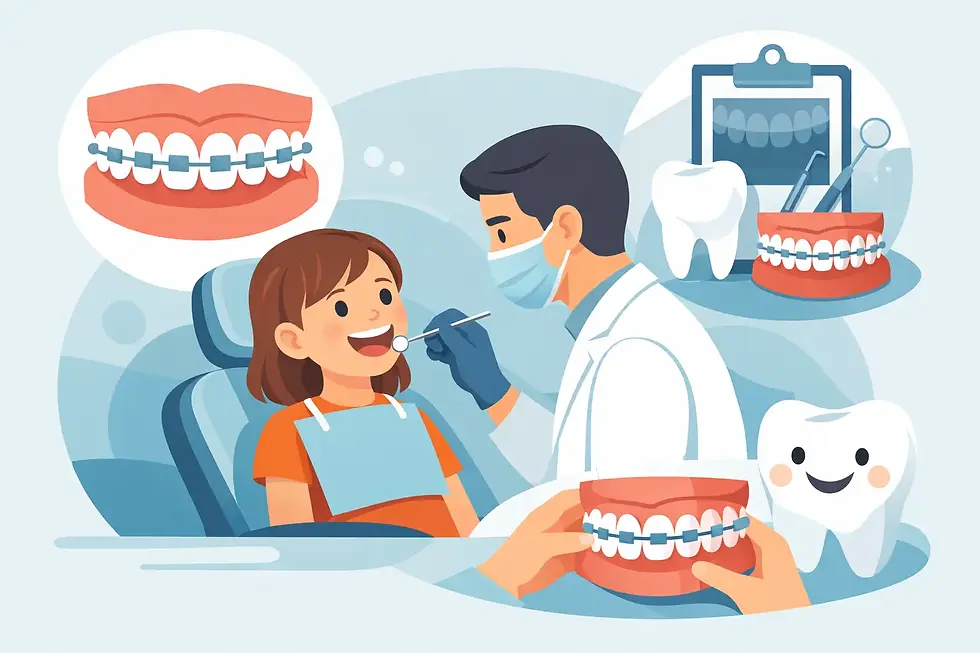
The orthodontist begins with an examination of your child’s teeth, gums, jaw relationship, and facial development. They will look for crowding, spacing, crossbites, overbites, underbites, open bites, and other alignment concerns. They also assess how the jaws are growing, because jaw position can affect both the look and function of a child’s smile.
Depending on your child’s needs, the visit may include digital images or X-rays. These records allow the orthodontist to see permanent teeth that have not erupted yet and to evaluate their position. Modern digital technology helps create precise records without the messy traditional impressions many parents remember.
The exam also includes a practical conversation. Has your child had trouble chewing? Do they avoid smiling in photos? Has their dentist mentioned a bite concern? Details like these help shape a recommendation that fits the child, not just the X-ray.
A clear recommendation, not a one-size-fits-all plan
After the evaluation, there are usually three possible paths. Your child may be ready to begin treatment, may benefit from a specific early intervention, or may simply need to be monitored as permanent teeth erupt.
Monitoring is a meaningful recommendation, not a vague answer. It means the orthodontist sees a development pattern that should be watched, with check-ins scheduled at the right intervals. This approach can prevent families from starting treatment too soon while ensuring a developing problem is not missed.
If treatment is recommended, the conversation should cover what it is designed to accomplish, how long it may take, and why this timing makes sense. Some children need a first phase of treatment to guide jaw growth, create space, or correct a bite that could become harder to address later. Others can wait until most or all permanent teeth have erupted for one comprehensive phase of braces or clear aligner treatment.
What an Orthodontist Is Looking For
Straight teeth are only part of the picture. During a child’s evaluation, an orthodontist considers how the bite functions and whether growth is headed in a healthy direction.
Crowding is a common concern. When there is not enough room for adult teeth, they may erupt rotated, overlap, or remain trapped beneath the gums. However, crowding does not always call for immediate treatment. The best timing depends on the child’s age, available space, and the position of developing teeth.
Bite relationships deserve equal attention. In a crossbite, some upper teeth sit inside the lower teeth instead of outside them. An underbite occurs when the lower teeth or jaw sit ahead of the upper teeth. An open bite leaves space between upper and lower front teeth when the back teeth touch. These conditions can affect chewing, tooth wear, and jaw growth, so earlier treatment is sometimes appropriate.
Protruding front teeth can also be more vulnerable to injury during sports or everyday play. In certain cases, guiding their position sooner can reduce that risk. Still, every recommendation should be based on your child’s individual growth pattern, not on a calendar alone.
Does Your Child Need Treatment Now or Later?
This is often the question parents care about most. The honest answer is: it depends.
Starting too early can mean a child spends more time in treatment than necessary. Waiting too long may allow certain bite or jaw concerns to become more difficult to correct. The right plan balances those realities. A specialist’s job is not to recommend treatment at every consultation. It is to identify the timing that offers the clearest benefit.
For some children, early treatment can reduce the need for more involved care later. For others, it is more efficient to wait for permanent teeth and complete treatment in one phase. There is no prize for beginning first. The priority is achieving a healthy, stable bite and a confident smile with a plan that makes sense for your child.
Questions Worth Asking at the Visit
Parents should leave a consultation understanding both the recommendation and the reasoning behind it. If you are preparing for an appointment, these questions can help guide the conversation:
What do you see in my child’s bite and jaw development?
Is treatment needed now, or is monitoring the better choice?
What could happen if we wait?
If treatment is recommended, what problem is it intended to correct?
What are the expected treatment options and time commitment?
How will you monitor my child’s progress and protect the results afterward?
A thoughtful orthodontic team will welcome these questions. Clear communication matters because orthodontic care is a partnership between the specialist, the child, and the family.
Choosing Specialized Orthodontic Care for Your Child
Your family dentist plays an essential role in protecting your child’s oral health, but orthodontics is a dedicated specialty focused on tooth movement, bite correction, and facial growth. Choosing an orthodontic practice means your child’s plan is built around that specialized training and experience.
At Dixon Orthodontics, families can expect personalized guidance from a Board Certified Orthodontist, along with modern tools such as digital impressions and 3D printing when appropriate. Just as important, children need an environment where they feel heard and comfortable. A positive first visit can make future care feel far less intimidating.
Bring your questions, point out what you have noticed, and let your child know there are no wrong answers at the appointment. A well-timed consultation can replace uncertainty with a practical plan and give your child’s developing smile the attention it deserves.


Comments