
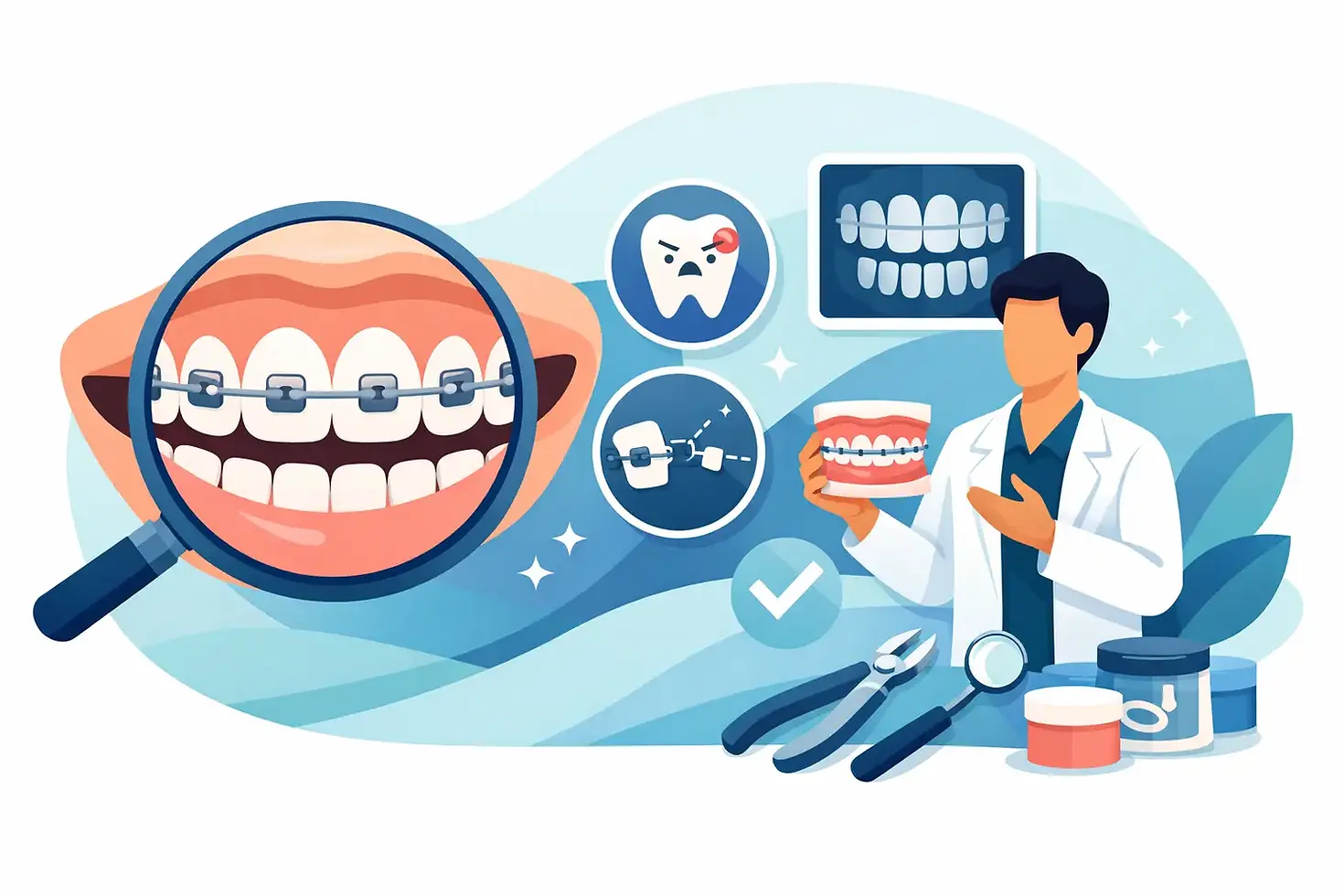
Common Braces Problems Solved by Your Orthodontist

When people search for "common braces problems solved," they are usually dealing with a very real moment: a sore tooth before school, a wire rubbing a cheek, or a bracket that feels loose after dinner. Most braces concerns are manageable, and many do not require an emergency visit. Knowing what to do first can make your child or your own treatment much more comfortable while protecting the progress already made.
Common Braces Problems Solved Safely at Home
The first days after braces are placed or adjusted can bring tenderness, especially when biting into food. This is normal. Braces are gently moving teeth through the bone, and that pressure can make teeth feel sensitive for several days.
Choose softer foods while the tenderness settles. Yogurt, soup, eggs, pasta, oatmeal, smoothies, and soft fruit are easier on sore teeth than crunchy or chewy foods. A cold drink or a chilled soft food may also feel soothing. If appropriate for you or your child, an over-the-counter pain reliever can help when used exactly as directed on the label. If you have questions about which medication is suitable, ask your physician or pharmacist.
Tenderness should gradually improve. Pain that is severe, continues to worsen, or is paired with facial swelling, fever, or a dental injury deserves a call to your orthodontist or dentist.
A wire is poking the cheek or gum
A poking wire is one of the most common braces frustrations. It may happen after teeth begin shifting, because a wire that once fit neatly can extend farther at the back of the mouth. It can also occur if the end of the wire slips out of its proper position.
Start by rinsing with warm salt water to calm irritated tissue. Dry the area as well as you can with a tissue or clean gauze, then place a small piece of orthodontic wax over the sharp spot. Wax works best when the bracket or wire is dry. Replace it after eating and brushing as needed.
Do not pull on the wire or attempt to cut it without instructions from your orthodontic office. A wire can be difficult to control, and an at-home repair may create a bigger problem. Call the office so the team can decide whether you need to be seen promptly or can stay comfortable with wax until your next visit.
A bracket feels loose
A bracket can loosen when it is bumped by a hard food, a sticky candy, or an accidental bite. In many cases, the bracket remains attached to the wire and simply slides or moves slightly. While it may feel strange, it is usually not an emergency.
Avoid foods that could shift it further, keep the area clean, and use wax if it rubs. Do not try to glue the bracket back in place. Household adhesives are not safe for use in the mouth and can interfere with a proper repair. Contact your orthodontic office and describe where the bracket is located, whether it is still attached to the wire, and whether it is causing pain.
If a bracket comes completely off, save it if possible and bring it to your appointment. The timing of the repair depends on its location and your treatment stage. A loose bracket near the front may need attention sooner than one that is comfortable and not affecting the wire.
Mouth Sores and Irritated Gums
Brackets and wires can create small sore spots while your cheeks and lips adjust. This is especially common at the beginning of treatment, after an adjustment, or when an appliance has a new edge your mouth has not adapted to yet.
Orthodontic wax provides a protective barrier, but good hygiene is equally helpful. Brush carefully around the gumline and brackets, and rinse with warm salt water to keep the area clean. A mild rinse can soothe irritated tissue without disrupting your braces.
If a sore does not improve within about a week, becomes unusually large, or keeps returning in the same location, let your orthodontist know. The appliance may need a small adjustment. Persistent sores should not be something a patient simply has to tolerate.
Swollen or bleeding gums
Gums can look puffy or bleed during brushing when plaque collects around brackets. Braces add more surfaces where food and bacteria can hide, so brushing may need more time and attention than it did before treatment.
Use a soft-bristled toothbrush and angle it around the brackets and gumline. Clean between teeth with the tools recommended by your orthodontic team, such as floss threaders, an interdental brush, or a water flosser. Bleeding often improves when cleaning becomes more consistent, but gums that are very swollen, painful, or bleeding heavily should be evaluated. Sometimes the issue is hygiene-related, but gum health always deserves professional attention.
Food Stuck in Braces Is More Than an Annoyance
A piece of spinach in a bracket is easy to notice. Smaller food particles are not. Left behind, they feed plaque and increase the chance of cavities, white spots, gum inflammation, and bad breath during orthodontic treatment.
A travel toothbrush, interdental brush, or water rinse can be useful after meals away from home. At home, take the extra minute to inspect the braces in the mirror after brushing. Teens with busy schedules often benefit from keeping a compact braces kit in a backpack, sports bag, or car.
It also helps to avoid the foods most likely to damage braces in the first place. Hard candy, popcorn kernels, ice, chewy caramel, and sticky candy can break brackets or bend wires. Crunchy foods such as apples and carrots are usually best cut into bite-size pieces rather than bitten into directly. These small adjustments can prevent unexpected repairs and keep treatment moving on schedule.
Lost Elastics, Broken Chains, and Other Small Changes
If your orthodontist has prescribed elastics, wearing them exactly as directed matters. Elastics help coordinate the bite, not just straighten individual teeth. Missing them occasionally is common, but repeatedly skipping wear can extend treatment time or limit the result.
If an elastic breaks or is lost, replace it with a new one if you have been given extras. Do not double up elastics to make up for missed time, and do not switch to a different size or configuration. Call the office if you run out, are unsure where an elastic should attach, or have trouble keeping it in place.
A colored elastic tie, power chain, or other small component may loosen between visits. These parts are often not urgent, but the orthodontic team should know about the change. A quick call and a clear description can help determine the right next step.
When a Braces Problem Needs a Same-Day Call
Most braces issues can wait for guidance from your orthodontic office, but a few situations need more immediate attention. Call promptly if there is significant swelling, uncontrolled bleeding, a tooth injury, severe pain that does not improve, a swallowed or inhaled appliance part, or a wire causing injury that wax cannot cover.
A trauma involving the mouth or face should also be evaluated quickly. If a tooth is knocked loose, pushed out of position, or completely knocked out, contact your dentist or emergency dental provider right away. Orthodontic appliances may need special handling after an injury, but protecting the tooth and surrounding tissues comes first.
For less urgent concerns, taking a clear photo before you call can be helpful. It allows the orthodontic team to see the wire, bracket, or irritated area and give more specific guidance. This is particularly useful for families trying to decide whether a child needs an earlier appointment.
Keep Your Orthodontic Team in the Loop
Braces are designed to handle normal daily life, but they work best with regular care and open communication. Never feel embarrassed about a loose bracket, missed elastic, or question about discomfort. Addressing a small issue early is usually simpler than waiting until it affects treatment.
At Dixon Orthodontics, patients and families can expect personalized guidance from a dedicated orthodontic team, whether the concern is a routine adjustment or an unexpected braces problem. A quick call can provide reassurance, protect your treatment plan, and help you get back to smiling comfortably.


Comments