

Teeth Straightening Options for Adults
- Gary Dixon
- Apr 28
- 6 min read

If you have been putting off orthodontic treatment because you assume you missed your window, you are not alone. Many people start researching teeth straightening options adults can realistically fit into work, family life, and a busy schedule only after years of feeling self-conscious in photos, noticing crowding getting worse, or dealing with bite-related wear.
The good news is that adult orthodontic treatment is common, effective, and more adaptable than many people expect. The better question is not whether adults can straighten their teeth. It is which treatment makes sense for your goals, your bite, and the level of visibility and flexibility you want during the process.
Teeth straightening options adults commonly consider
For most adults, the main choices are traditional braces, clear braces, and clear aligners. In some cases, retainers or limited treatment may also play a role, especially when the issue is minor relapse after past orthodontic care. Each option can improve alignment, but they do not all work the same way or fit every case equally well.
A consultation with a Board Certified Orthodontist matters here because tooth movement is only part of the picture. Bite function, jaw relationship, gum health, bone support, and long-term stability all affect what is appropriate. Adults often come in thinking they need the least visible option, then learn that the real decision involves balancing appearance, precision, treatment time, and how much responsibility they want to take on day to day.
Traditional braces
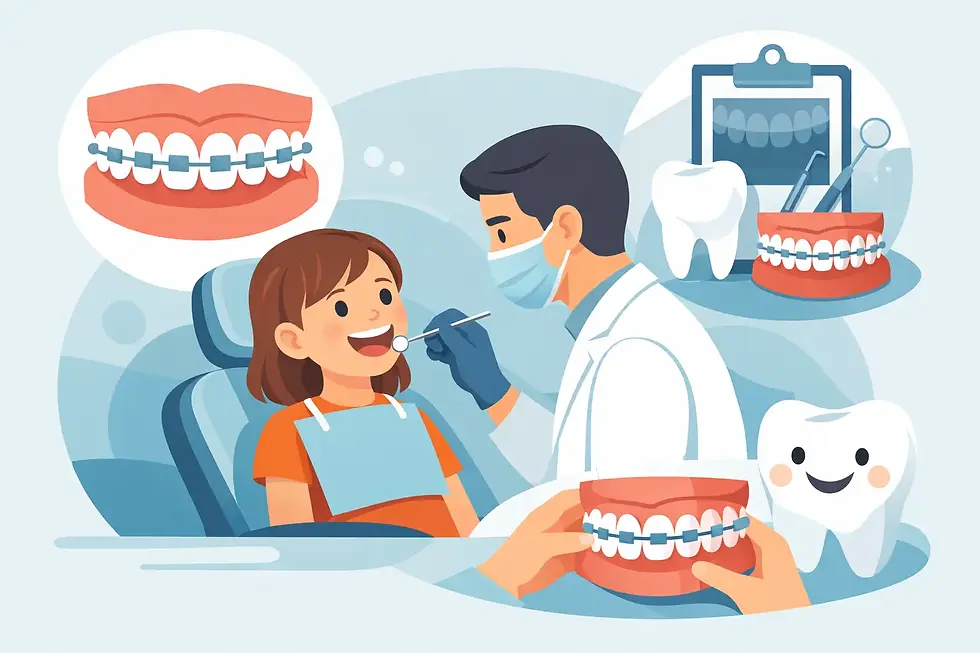
Traditional braces remain one of the most reliable choices for adults with moderate to complex alignment or bite concerns. Brackets and wires give the orthodontist a high level of control, which can be especially helpful when teeth need significant rotation, vertical movement, or coordinated bite correction.
Adults sometimes hesitate because they associate braces with middle school. In practice, many appreciate that braces are always working. You do not have to remember to put them back in after coffee, meals, or meetings. If your schedule is hectic or you know compliance may be a challenge, that built-in consistency can be a major advantage.
The trade-off is visibility. Metal braces are the most noticeable option, and they can cause some irritation early on as your mouth adjusts. Still, they are often the best solution when efficiency and control matter more than keeping treatment discreet.
Clear braces
Clear braces function much like traditional braces, but the brackets are tooth-colored or transparent, making them less obvious. For adults who want the precision of fixed treatment without the look of metal, this can be a strong middle ground.
They are not invisible, and certain foods and drinks can contribute to staining around the ligatures depending on the system used. They may also be slightly bulkier than metal brackets. Even so, many adults like clear braces because they offer dependable tooth movement with a softer appearance.
Clear aligners
Clear aligners are popular for good reason. They are removable, low profile, and easy to fit into professional and social settings. Adults who want minimal disruption often start here, especially if they have mild to moderate crowding or spacing.
Because aligners are removable, they make brushing and flossing easier than fixed braces. There are no brackets or wires, which can mean less soft tissue irritation for some patients. Digital planning also allows for a highly customized treatment approach.
But clear aligners are not automatically the best option for every adult. Success depends heavily on wearing them as directed, usually 20 to 22 hours a day. If they stay out too long, teeth do not track as planned, and treatment can slow down or become less predictable. Some more complex bite issues can still be treated with aligners, but they require careful planning and may not be ideal in every case.
What adults should weigh beyond appearance
It is easy to focus on what treatment looks like in the mirror. A better decision usually comes from looking at how each option fits your actual life.
If you want the least visible treatment and you are disciplined enough to wear trays consistently, clear aligners may be an excellent fit. If you want a system that keeps working without relying on your memory, braces may be the safer choice. If your case involves more complex movement, the discussion may shift from preference to what will give the most predictable result.
Comfort also varies. Braces can cause soreness after adjustments, and brackets may rub against the cheeks and lips at first. Aligners can feel smoother overall, but they still create pressure when switching to a new set. Neither option is pain free, but most adults find the discomfort manageable and temporary.
Lifestyle matters too. If you snack often, drink coffee throughout the day, or travel frequently for work, aligners require more planning. You need to remove them before eating and drinking anything except water, clean your teeth, and place them back in. Some adults find that routine easy. Others discover it is more disruptive than expected.
How long does adult treatment take?
Treatment time depends on the severity of the alignment issue, the bite, the method used, and how consistently you follow instructions. Some adults with minor relapse may need only limited treatment. Others with more involved crowding or bite correction can expect a longer timeline.
There is no honest one-size-fits-all answer. Mild cases may be shorter, while comprehensive treatment often takes many months and sometimes longer. What matters most is building a plan around your specific needs instead of chasing the fastest possible option.
Speed is not always the same as quality. Teeth need to move in a healthy, controlled way that respects the surrounding bone and gum tissue. For adults, that careful approach is especially important because oral health history can be more complex than it is for younger patients.
Are adult teeth harder to straighten?
Adult teeth can absolutely be straightened, but treatment planning may require more attention to details such as gum recession, missing teeth, old dental work, or wear from clenching and grinding. That does not make treatment unrealistic. It simply means adult orthodontics should be approached thoughtfully.
This is one reason specialist care matters. An orthodontic office focused on tooth movement and bite correction can evaluate how all of these factors interact before treatment begins. Modern tools such as digital impressions and 3D technology can also help improve precision and patient comfort during that process.
Cost and value in teeth straightening options adults choose
Cost is a practical part of the conversation, and it is reasonable to ask about it early. Pricing varies based on treatment complexity, the type of appliance, and how long care is expected to last. In general, more involved cases cost more than mild alignment corrections.
What matters is not just the fee, but the value of expert diagnosis, careful monitoring, and long-term stability. Lower-cost mail-order or remote-only models can look appealing at first glance, but they may not offer the same level of supervision for bite issues, tracking problems, or unexpected changes along the way. For adults investing in their smile and oral health, that difference can matter a great deal.
How to decide which treatment is right for you
A good consultation should leave you feeling informed, not pressured. You should understand what is being corrected, which options are realistic for your case, how long treatment may take, and what will be expected from you during and after care.
If you are mainly concerned about appearance, say that. If convenience matters most, say that too. The best treatment plan is not just clinically sound. It also fits your lifestyle well enough that you can follow through successfully.
For some adults, the answer will be clear aligners because discretion is a top priority and the case is a good match. For others, braces will be the better choice because they offer more control and remove the burden of remembering wear time. Sometimes the right recommendation is not the one you expected, and that is often where specialist guidance makes the biggest difference.
At Dixon Orthodontics, that conversation is built around personalized care, advanced technology, and treatment recommendations based on what will serve you best over time, not just what sounds easiest in the moment.
Straightening your teeth as an adult is not about trying to turn back the clock. It is about choosing a healthier bite, a more confident smile, and a treatment plan that fits the life you are living now.


Comments